Conference Posters
A conference poster is a great way to share your research. Not everyone will conduct pioneering studies which will be published in a high-impact journal. Still, the dissemination and communication of smaller studies, incremental improvements in care, or early data, is just as valuable.
Ms Ross shared the benefits and importance of disseminating research using poster abstracts, sharing that presenting poster abstracts can be a great opportunity as:
- It is a less intimidating way for early-career researchers to share new findings and ongoing research projects
- It provides an ideal opportunity for professionals to network
- Feedback and experience gained can help you progress
Ms Ross expanded on the importance of ensuring your poster has visual impact. The layout should be designed so that the audience can easily understand the sequence of information presented.
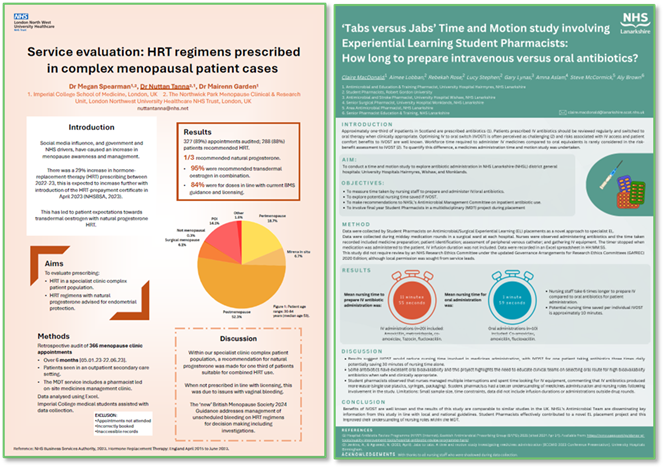
Posters that received awards after judging at the 2024 RPS Annual Conference
Ms Ross went on to share the #BetterPoster design, which is another possible way to design 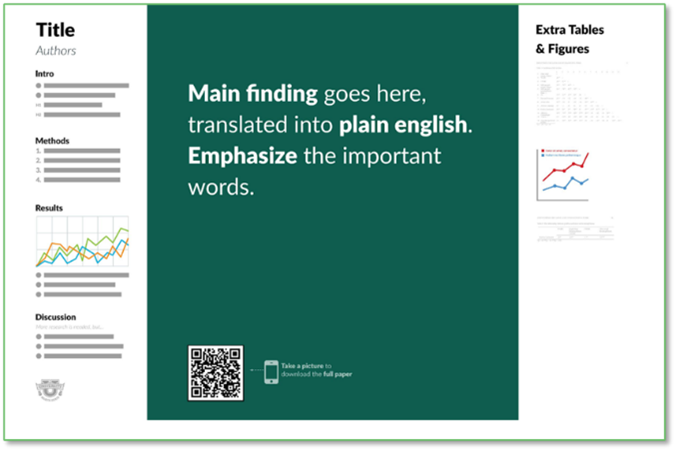 conference posters. Developed by Mike Morrison, a psychology PhD student, in 2019, the #BetterPoster style was created to make poster sessions more efficient.
- Posters should maximise the amount of insight for people attending a poster session
- Detailed information should still be present, but not the core of the poster.
- These design goals should be easy to achieve and accessible to new and old scientists
Although a great opportunity to share their research, many early-career pharmacists struggle to develop conference abstracts and posters. Ms Ross ran through some common pitfalls which are commonly seen in RPS Conference submissions, to help attendees understand what to look out for when submitting their abstracts and developing their posters:
- Not following the conference-specific guidance
- Illegible figures and text
- Complex structure and/or jargon that makes your poster difficult to follow
- Not enough methodological detail, meaning readers can’t assess study validity
- Formatting inconsistencies
- Referencing errors