Sharon 'Sibby' Buckle, FRPharmS
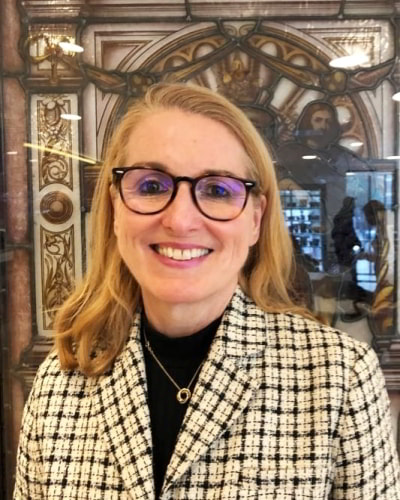
RPS English Pharmacy Board member
“If you are a royal college the government comes to you for insight when they are developing policy, whereas in the past pharmacists have had to knock on the door and hope to be invited. I believe we should have a seat at the table.”
The view of a longstanding board member
Why are you supporting RPS’ proposals for change and royal college ambition?
I have three main reasons: status, significance, and structure. Status is about being a royal college and having the same status as other professions. This means we have greater significance – we have a seat at the table and exert more influence. And structure is important for career pathways for pharmacists, and that’s an important role that a Royal College should play.
Why do you think the move to becoming the Royal College of Pharmacy is important?
I was the public affairs lead on the RPS English Pharmacy board for a while, and I had lots of meetings with MPs. I remember one member of the House of Lords saying to me: “Oh, the Royal Pharmaceutical Society, you must have lots of money because you’re with the pharmaceutical industry”. I had to point out that, actually, we don’t represent the pharmaceutical industry, we are about the profession of pharmacy. So I believe our name doesn’t “say what it does on the tin” – it isn’t clear what we do as an organisation. If we have clarity on that, it will be a lot easier to talk to people, improve how we talk to the NHS, and help us improve patient care, which at the end of the day is what we’re all about.
If you are a royal college, the government comes to you for insight when they are developing policy, whereas in the past pharmacists have had to knock on the door and hope to be invited in. I believe we should have a seat at the table.
 Apart from perceptions, what does royal college status mean to you?
I come from a very medical family. My brother is a surgeon and he’s a member of the Royal College of Surgeons. Both my daughters are medics - one is in obstetrics and the other is in A&E. I’ve watched them on their journeys, and seen how important it has been to get that recognition as a member of their royal colleges as they go through each stage of their career pathway. It’s not just about the letters after your name, it facilitates a career path.
How does your career path influence your thinking about the C&G reform at RPS?
I’m a community pharmacist. It used to be that, once you’d done your degree and your foundation year, for a lot of people in community pharmacy there weren’t many routes to building your career. I became a store manager and went into the business side, but we’ve been crying out for a clinical pathway for years.
With credentialing, RPS is enabling people to become either advanced pharmacy practitioners or consultant pharmacists. They don’t necessarily provide the education but they are putting that RPS stamp on it, saying, this person has been credentialed, that means you can trust the quality of what they’re doing. So, I think RPS are already doing some of the things that royal colleges do, and we should support changes that are going to strengthen the organisation.
What would your message be to other voters?
The governance changes are going to help us work better. Things like separating off the publishing arm mean that it is able to be an entrepreneurial business, and the professional leadership body is able to focus on what the profession, and patients, need. And moving to charitable status, having public interest at the heart of the organisation, means we will be more open and flexible to how the future of the profession could develop.
And I think we’ve got a really bright future!