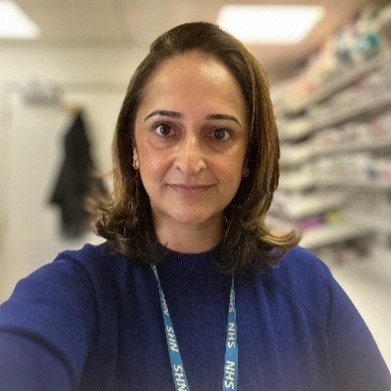
 by Sukhi Basra, Independent Prescriber Pharmacist at Clinichem Pharmacy
Why did I become a Designated Prescribing Practitioner?
My name is Sukhi Basra, and over my 26-year career in community pharmacy, I’ve worked closely with colleagues from the multidisciplinary team and established a great network of GPs, advanced nurse practitioners, pharmacists, pharmacy technicians, pharmacy students and many more. Now, working as a prescribing pharmacist for over four years at my local GP practice in London, it became impossible to ignore the fact that I should become a Designated Prescribing Practitioner (DPP).
How did I become a DPP?
I saw a LinkedIn post encouraging prescribing pharmacists to apply, so I signed up for the programme. Like every other pharmacist, I’m time-poor, so being disciplined and chipping away at the learning every couple of days was pivotal to success.
It was important to me that someone like myself, with a community pharmacy background, became a DPP. Too often we assume that pharmacists must be in a GP practice to take on the role.
As a profession, we often underestimate the amazing counselling skills of community pharmacists, forgetting that we deal with challenging patients from diverse socio-economic backgrounds every day. Becoming a DPP challenged me to reflect on my daily practice and gave me opportunities to identify my own prescribing skills.
Being able to create strategies for useful learning - even in a busy community practice - is important, and I believe more can be done to help our fellow IP community pharmacists, as well as to better prepare for the coming influx of graduates who will need DPPs to qualify. That’s why I took on this challenge: to help my fellow pharmacists.
I can’t pretend it was easy. I had to squeeze in my training and reflection between a full-time day job, raising three busy daughters, being an active NPA board member, a Kensington Chelsea and Westminster Community Pharmacy board member - and each of these roles has enough responsibilities. However, I did complete my DPP qualification- miracles do happen!
What happens next as a DPP?
The skills that I’ve found essential to being a good DPP include:
- Listening with integrity and intention, to help colleagues (not subordinates) become safe prescribers
- Providing them with the tools to become curious practitioners
- Being aware that an IP qualification is only the beginning of a prescribing journey that will continue to evolve.
The future of pharmacy, especially community pharmacy, lies in providing more clinical services; programmes like Pharmacy First reflect the change that is coming. Commissioned IP pathways in community pharmacy are also an indication community is a key component of clinical training for future IPs.
And always remember, not to underestimate the importance of continually developing; even as a DPP you should expect to receive feedback from your students - not just provide it. This should not be an excuse to point out the fault of others: the outcomes of your students are only as good as your mentorship.
Read the report from our DPP roundtable.
Take a look at the new GB-wide recommendations from RPS on supporting pharmacist DPPS..
Read more RPS blogs.