By RPS Museum placement students Abigail Daniels and Leah Meek
For South Asian Heritage Month, we are highlighting two fascinating examples of Ayurvedic medicines in our museum’s collection – Jakhme Ruz, a medicinal ointment from Gujarat, and Maha Sudarshan Churna, a powdered herbal remedy from early 20th-century India. Both offer an insight into the enduring traditions of Ayurveda and its influence on health practices worldwide.
Ayurveda: the science of life
Ayurveda is one of the world’s oldest healing practices, originating in India over 5,000 years ago. The term comes from the Sanskrit words Ayur (life) and Veda (science), reflecting its focus on holistic wellbeing through a balance of mind, body and spirit.
Treatments often combine herbal medicine, dietary guidance, meditation and yoga. While still widely practised in South Asia, Ayurveda has gained international recognition. In the UK, the Ayurvedic Medical Council for Britain oversees safety and standards of Ayurvedic medical practices.
Jakhme Ruz – a century of healing
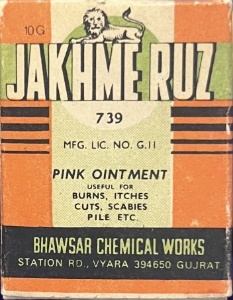 Jakhme Ruz is a pink ointment used for skin conditions such as burns and itching, according to its small but colourful box. Containing zinc oxide, sulphur sublime, resorcinol and mercuric chloride, this product was manufactured in September 1975 by Bhawsar Chemical Works in Vyara, Gujarat. The company has produced Ayurvedic medicines since 1925, meaning 2025 marks its centenary.
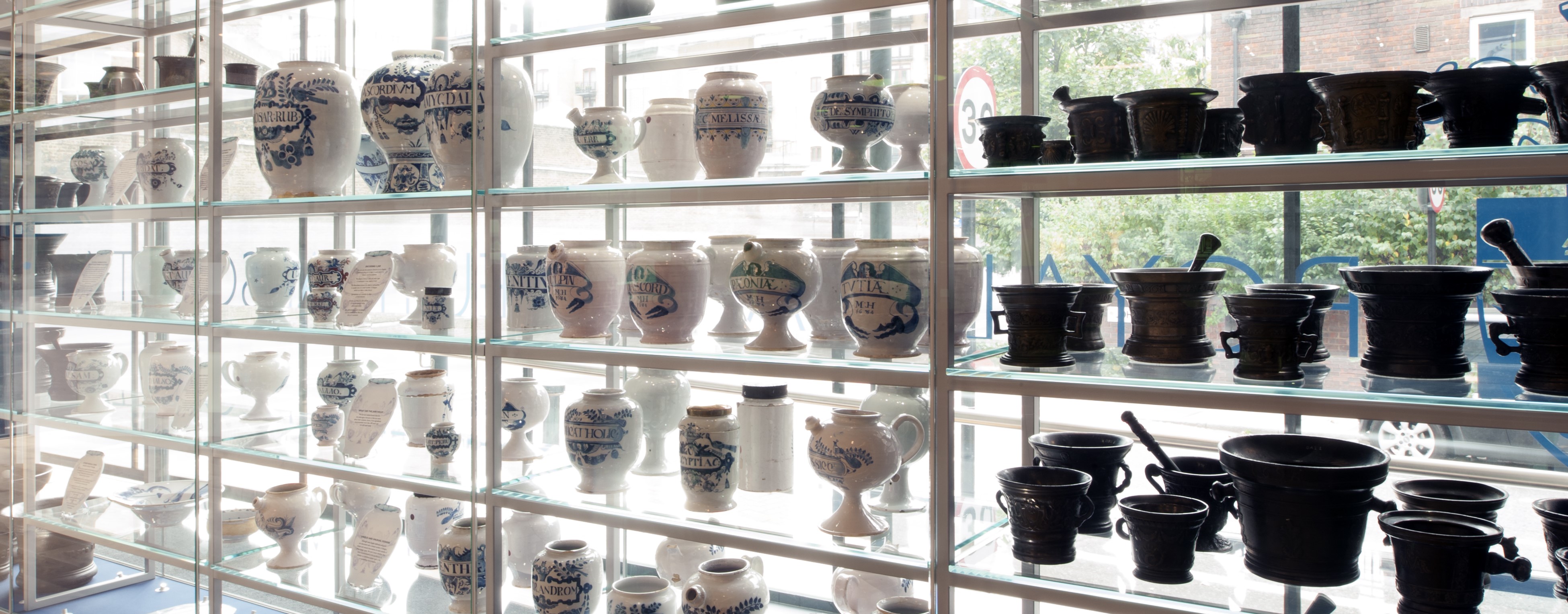
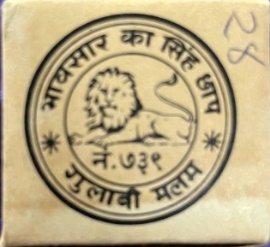 One notable feature of the ointment’s packaging is the image of an Asiatic lion – an animal now found only in Gujarat, with around 600 remaining in the wild. It’s presence on the box connects the product to its place of origin and reflects the symbolic role animals often play in pharmaceutical branding – like the crocodile on display in the RPS Museum and the unicorn used for Burroughs Wellcome & Co.
Maha Sudarshan Churna – the ‘Great’ powder
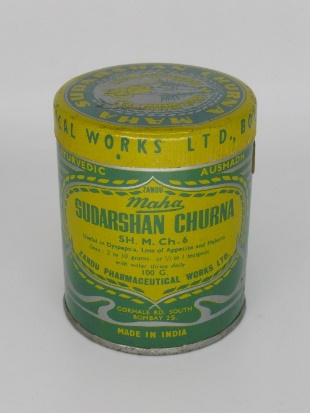 This tin of Maha Sudarshan Churna in the RPS Museum collection dates back to 1910 and is a powdered Ayurvedic medicine traditionally used to reduce fevers, boost immunity, and in the early 20th century, treat malaria.
The name includes the Sanskrit word Maha, meaning ‘great’ or ‘big’, referencing both its perceived importance and the sheer number of ingredients – more than 50 in total.
The formulation draws from a variety of herbs, plants, spices and fruits. Examples include Cinnamomum zeylanicum (true cinnamon) for digestive issues, Indian gooseberry for its antioxidant properties, and Holarrhena pubescens, a flowering plant used for gastrointestinal conditions.
The tin in the RPS Museum bears English labelling and the phrase “For Export Only”, reflecting when India was under the control of the British Empire for nearly 200 years. This suggests the medicine was sent to the UK to be sold here, but who the product was sold to is unknown.
‘Roots to Routes’
This year’s South Asian Heritage Month theme, ‘Roots to Routes’ encourages the celebration on how traditions are passed through generations, how culture shapes identity and how South Asian communities have travelled and built connections in the UK.
Products like Jakhme Ruz and Maha Sudarshan Churna represent centuries old- systems, regional identity and the exchange of ideas across continents.
By preserving and sharing these items, the RPS Museum celebrates the role of Ayurveda in both historical and contemporary pharmacy. They are reminders of the global journey of medical traditions and how ancient practices have shaped healthcare.
More from the RPS Museum.
Read more RPS blogs.