By Richard Draper, Principal Pharmacist for Education & Training at The Royal Wolverhampton NHS Trust
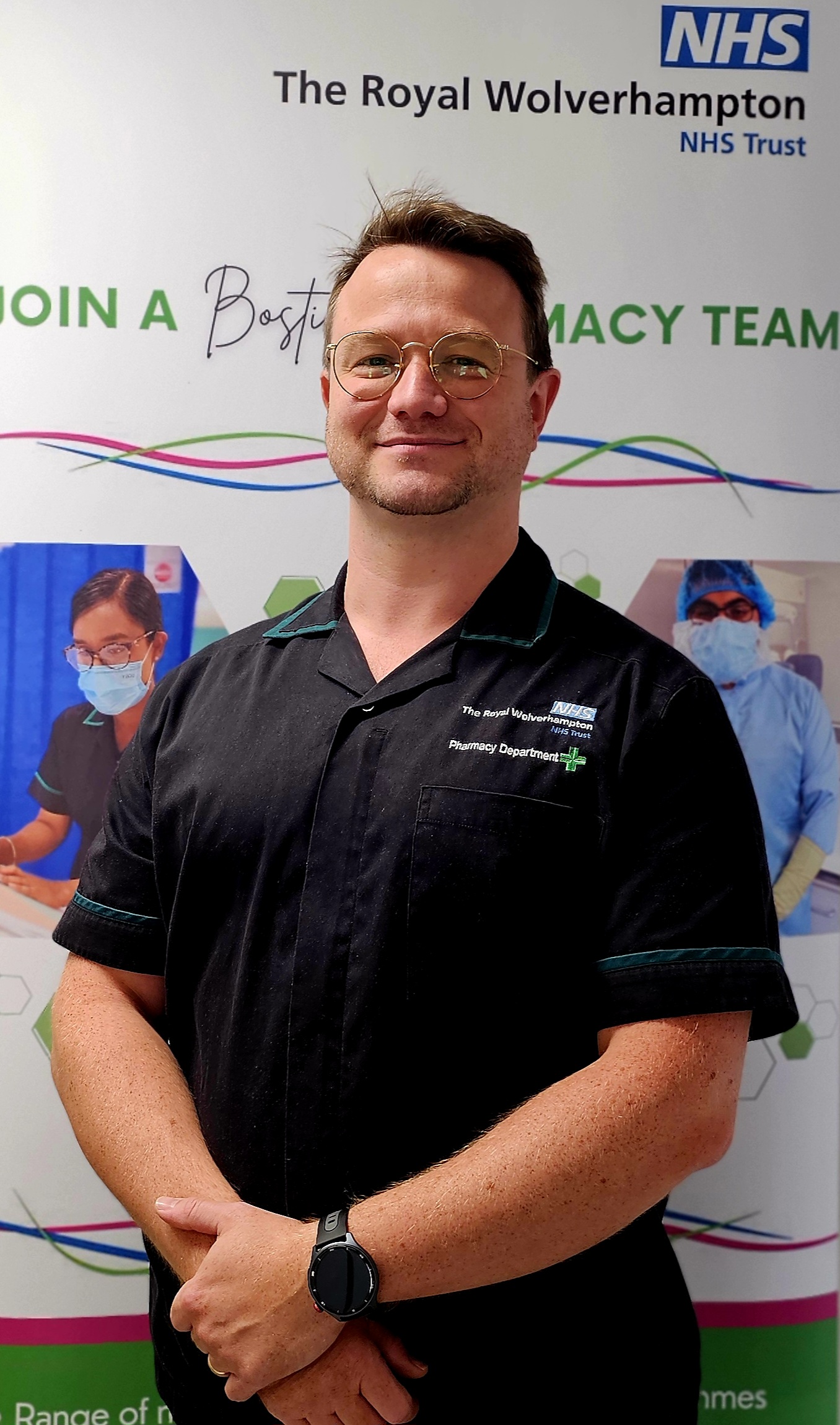
In 2021 the GPhC published the “Revised Standards for the Initial Education and Training of Pharmacists”, culminating in Independent Prescribing at the point of registration. This was an exciting moment for the profession as pharmacists would be the first non-medical healthcare professionals to register with an “IP” annotation. To facilitate this, secondary care undergraduate placements were born to provide newly qualified pharmacists with the necessary skills and confidence to provide enhanced clinical services to patients.
The jewel in the crown of secondary care placements
…is patient access! Hundreds or thousands of patients are in beds in each hospital, a captive audience for a pharmacy student to practice their consultation and clinical skills. Students need not be interested in a career in hospital; they should be encouraged to make the most of the opportunity and take the learning away to whichever sector they wish to specialise in. Of course, secondary care offers many other benefits and exciting opportunities including MDT working, access to medical records/blood results, and “wow” moments such as attending a drug round or surgical procedure.
The size of the challenge
In the Midlands alone there are at least 3000 students enrolled on the MPharm course. To get this number of students access to a robust placement experience, sufficient for them to “hit the ground running” in the Foundation Training year, requires a new approach.
Testing undergraduate placements
I set out to uncover whether high-quality undergraduate placements can be successfully delivered at the scale consistent with the size of the challenge faced.
50 year-three students were allocated simultaneously to general medical and surgical inpatient wards in four, two-week blocks (providing sufficient scale unlocks the potential for placement “blocks”).
The model of supervision was “arm’s-length”. Students were expected to work independently (i.e. not shadowing) and be largely self-directed with light-touch support. Robust workbooks facilitated this. The placement team provided a thorough group induction on day one, group teaching/case discussion sessions twice per week and regular “drop-ins” onto the wards. A placement mobile was held by the team as a point of contact for students.
Feedback at the end of the placements blocks was collected, with a keen focus on:
- Clinical knowledge
- Communication skills
- Patient consultation skills
Results
- 94% of students improved their clinical knowledge (6% neutral)
- 98% of students improved their confidence in communication and patient consultation skills (2% neutral)
The most enlightening feedback of all was the answer to the free-text question “my favourite part of placement was” …patients. We should all be proud and inspired that third-year pharmacy students had patients at the centre and as the highlight. When I was at university I never spoke to a real patient independently, let alone had it as my highlight.
This pilot clearly demonstrates that highly effective secondary care placements can be delivered at a scale consistent with the size of the challenge faced.
Now what?
Ask yourself the following questions:
- Do you want more effective newly qualified Pharmacists and a highly skilled workforce?
- Would you like to showcase your organisation?
- Do you want to generate Clinical Tariff income?
If the answer to any of these questions is “yes”, then dream big, open your doors wider, and set up large-scale undergraduate placements in your hospital.
Read more RPS blogs.